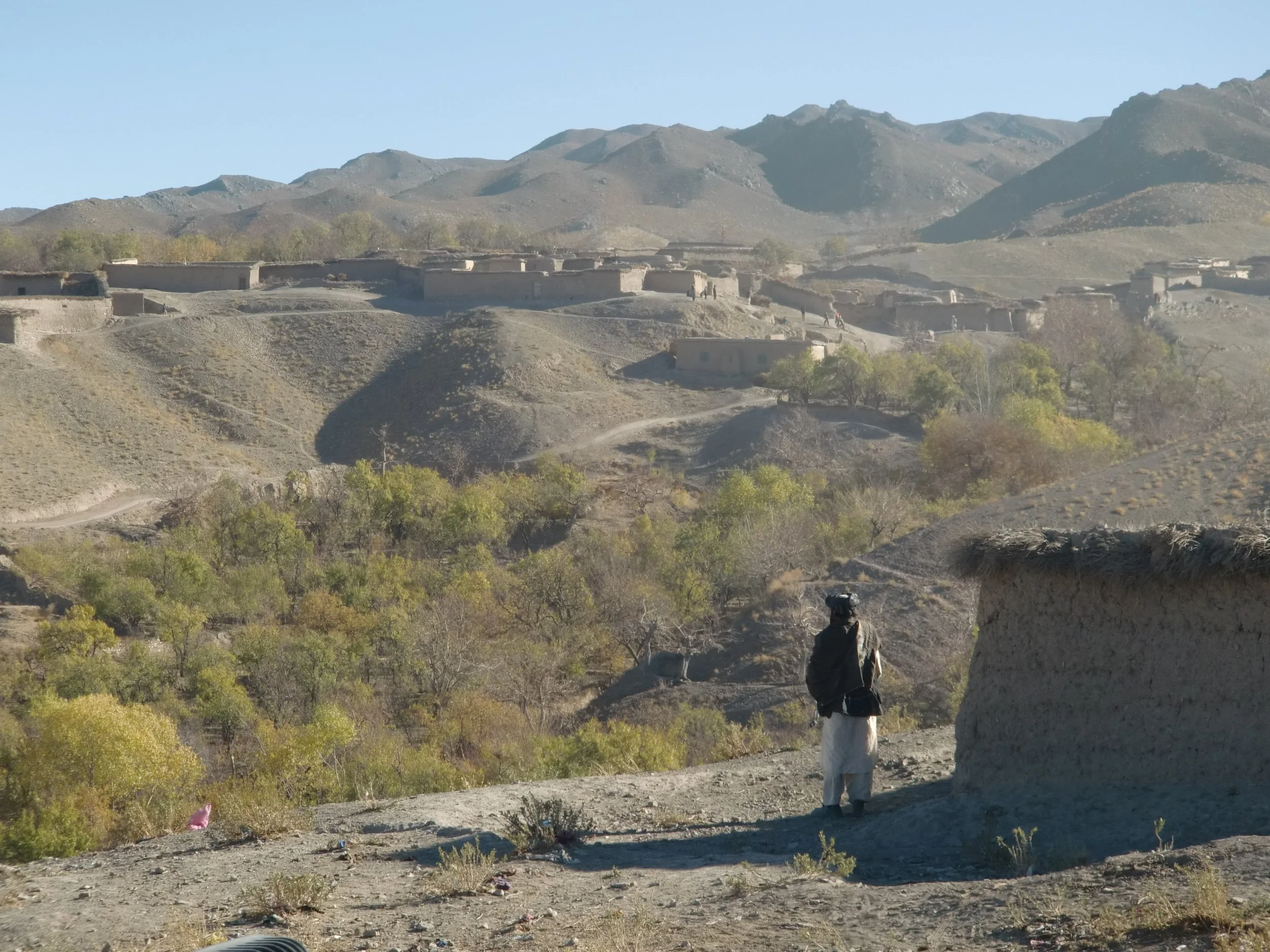
“When I die and meet God, I will ask Him why He made me Afghan.”
-Abdulhaq, Chapter One
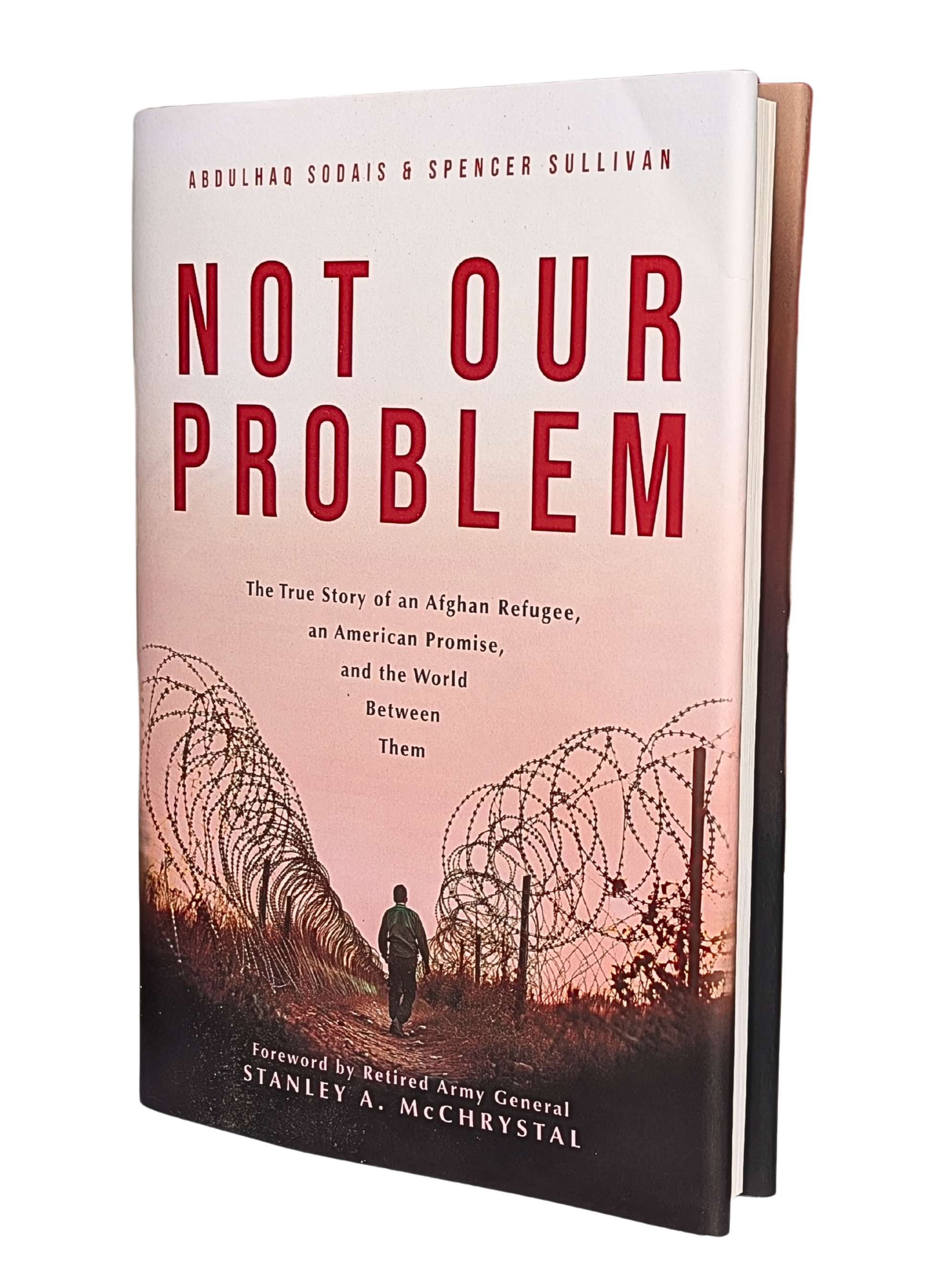
Order Your Copy Today




Available in all formats
Praise for
NOT OUR PROBLEM
Reviews

“An account of the war in Afghanistan from the perspectives of a U.S. Army officer and his Afghan interpreter.
In their debut collaboration, Sodais and Sullivan trace their parallel paths throughout the U.S. invasion of Afghanistan at the start of the 21st century. Sodais was a young Persian-speaking Afghan at the time of the rise of the Taliban, which was brutal for him. “The Taliban used their position of absolute power to punish and humiliate people who did not align with their version of Islam,” he writes. “It was another lesson in the use of violence I would learn all too young.” In 2012, he was commissioned to work as an interpreter for an American platoon and met U.S. Army officer Sullivan. The two soon formed a working relationship and then a friendship, and the narrative shifts between their viewpoints.
Sodais remarks on the oddities of the U.S. military he observed as he accompanied Sullivan on his various missions, and Sullivan reflects on the unforgiving country he was invading at the behest of his government. “Life is cheap in Afghanistan, and violence part of its long, bloody history,” he writes. “What we took as jest or perfectly acceptable in the western world could be seen as unforgivable transgression in the East.” The contrasting perspectives render the book compelling and readable. The story becomes even more darkly gripping once the narrative reaches the chaotic U.S. withdrawal from Afghanistan in 2021 and the resurgence of the Taliban, which left Sodais scrambling to stay alive and escape the country, which proved incredibly dangerous and difficult. “I wanted to leave, and they wanted me gone, so why was it so difficult to actually do it?” Sodais wonders at one point. “Why was there such a strict jail sentence for refugees caught trying to leave?” Both Sodais and Sullivan are genial presences on the page, providing strikingly human responses to the war.
An engaging, relatable tale of a friendship forged during the U.S. invasion of Afghanistan.”
- Kirkus Reviews

“This morally urgent memoir traces the human cost of America’s longest war through the lives of Abdulhaq Sodais, an Afghan interpreter, and Spencer Sullivan, the U.S. Army officer he served beside. Structured in alternating perspectives, the book begins in Taliban-controlled Herat, where Sodais’s childhood is defined by the sharp edges of extremism and fear. As Sodais becomes an interpreter for U.S. forces, he forges a bond with Sullivan—sharing meals on jagged mountaintops and building trust under fire. After Sullivan returns home, Sodais—like thousands of Afghan allies—is promised a Special Immigrant Visa, only to be betrayed by a system that nullifies his 28 months of work over a minor, disputed infraction, leaving him marked for death by the Taliban.
The book’s emotional core lies in Sodais’s seven-month, $15,000 exodus from Herat to Germany, where the refugee crisis becomes a terrifying reality. He describes “the game”—the refugee euphemism for illegal crossings—with harrowing immediacy: beatings by smugglers, incarceration in Crete, and the indignity of hiding in cargo trucks. Sodais’s chapters are stark and embodied, grounded in trauma and the constant threat interpreters face as “traitors,” while Sullivan’s voice is measured, dissecting the ethical compromises of command. Their juxtaposition is devastating. In a moment of supreme irony, Sullivan realizes he is honeymooning in Greece at the very moment Sodais is fleeing the country illegally through the same airport. Together, both narratives show what it means to risk everything for a foreign power whose protection can evaporate without explanation.
Though some military detail may feel dense, it sharpens the book’s indictment: bureaucracy is never neutral when lives are at stake. The narrative pulls no punches regarding the systemic failures of the U.S. government, standing as a poignant revelation of the enduring debts of war—one that follows its story from battlefield to the dislocation of exile, carrying its ethical questions far beyond Afghanistan.
Takeaway: Striking portrait of unlikely friendship forged in war and faulty American promises.”
- Booklife Reviews
Follow us on Instagram